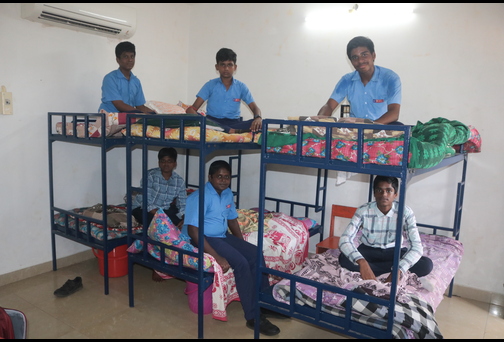
Choosing schools goes beyond looking at academic offerings. Parents must consider the schools’ approach to the safety and discipline of students, emotional and social growth, and overall preparation for life. This is where the residential approach to education has its greatest advantage.
Studying in a school with a hostel facility offers more than a place to stay. A school that has a hostel creates an environment where students learn, at a young age, the skills of independence, responsibility, and focus. These are important life skills that are difficult to learn outside the school years.
What is a school hostel, and how does it work?
A school hostel means that students live on campus and attend the same school where they also study. Their activities and daily routines, such as study periods, meals, sports, relaxation, and other activities, are organized and overseen by professional educators.
From a parent’s perspective, it reduces the ambiguity of the daily life of the student. From a student’s perspective, it increases the predictability and structure of their daily life.
Why should Parents choose schools with hostel facilities?
Many parents choose residential schooling because it removes common challenges like long commutes, irregular schedules, and distractions at home. A hostel facility in school ensures students follow a balanced routine that supports both learning and well-being.
Parents often notice:
- Improved focus on studies
- Enhanced personal discipline and time structure
- Reduced screen time
- A healthier balance between academics and recreation
These benefits become more visible as children settle into a stable daily rhythm.
How Hostel Life Supports Academic Growth
Hostel schooling has many perks, and the most important one is academic stability and growth. Because of the design of the hostels, they allow for fixed study times, peaceful study environments, and have teachers and study supervisors nearby for when they need help.
Academic benefits include:
- Dedicated time for homework and revision
- Peer learning through group study
- Faster doubt resolution
- Fewer distractions from travel and home
Over time, students are able to form study habits and self-regulation.
Building Independence and Life Skills Early
Students living away from home are encouraged to teach themselves self-management. Simple day-to-day tasks such as organizing belongings, following a schedule, and making decisions build self-confidence.
Students gradually develop:
- Self-discipline and accountability
- Decision-making skills
- Emotionally tough
- Become more flexible
These skills are very important not only for the future education of children, but also for life as an adult.
Social Development and Emotional Maturity
Hostel life naturally encourages interaction. Students live, learn, and grow alongside peers from different backgrounds, which broadens their perspective.
Social benefits include:
- Improved communication skills
- Stronger friendships and teamwork
- Healthy conflict resolution
- Respect for diversity and shared spaces
Such experiences help students become emotionally balanced and socially aware individuals.
Safety, Supervision, and Structured Discipline
A well-managed residential school prioritizes student safety and emotional well-being. Trained wardens, teachers, and support staff monitor students closely, ensuring they feel secure and supported.
Most hostel schools follow:
- Well-defined regulations and schedules
- Regular health and wellness checks
- Balanced schedules for study, sports, and rest
- Continuous supervision and guidance
Such an environment cultivates a sense of stability and enables students to direct their energies to remain task-oriented.
The Importance Of Location When Selecting A Hostel School
The location of a school plays a major role in accessibility and location planning. Schools in Cuddalore are reputed and preferred by many due to the educational ecosystem and ease of connectivity and the cultural surroundings are known to them.
Choosing the right location ensures:
- More convenience to parents
- Assistance from the local community
- Supportive and pleasant surroundings
For the students, a school in the right location will help ease some of the discomfort and even help parents feel more at ease.
Who Benefits the Most From Hostel Schooling?
Residential schooling is more advantageous to:
- Students from remote or rural areas
- Children focused on attaining academic scores and winning competitions
- Students who need a disciplined routine
- Families with frequent travel or work commitments
In these conditions, hostelling provides students with a sense of constancy and stability.
Common Concerns Parents Have and the Reality
It’s natural for parents to worry about homesickness or adjustment. In reality, most students adapt within weeks, with support from peers and staff.
Schools today focus heavily on:
- Emotional support and counseling
- Open communication with parents
- Gradual adjustment programs
With the right environment, children often become more confident and independent than expected.
Final Thoughts: Is a Hostel School the Right Choice?
Selecting a hostel school is an intentional choice, not a compromise. Effective management of residential schooling provides a protective, orderly, and enriching atmosphere that facilitates learning on an academic level and expand one’s self on a personal level.
Day schools may work well for diverse families, while hostel schools aim to foster responsibility and self-focus in students while promoting self-reliance to better equip them to navigate forthcoming challenges confidently.
FAQs
Is a hostel school safe for children?
Yes, most hostel schools follow strict safety rules with trained wardens, supervised hostels, and regular monitoring to ensure students are safe and well cared for.
At what age is it best for hostel schooling?
Most children adjust well to hostel schooling from around 8–10 years of age, once they are emotionally ready to follow routines and stay away from home.
Hostel school or day school – which is better?
Both have their benefits. Hostel schools offer structured routines and independence, while day schools allow children to stay closer to family. The best choice depends on the child’s needs.
Do hostel schools improve discipline?
Yes, hostel schools follow fixed daily schedules for study, meals, and activities, which helps students develop discipline and good habits over time.
What facilities should a school hostel have?
A good school hostel should include clean dormitories, nutritious meals, medical care, study areas, security, and trained supervisory staff.
What should parents check before choosing a hostel school?
Parents should review safety measures, hostel facilities, staff experience, academic results, communication policies, and the overall school environment.